What You May Notice Underwater on a SNUBA Trip

SNUBA Journal · Underwater moments
A SNUBA trip is less about ticking animals off a list and more about noticing the light, sound, movement and small surprises of being underwater.
The first thing many guests notice underwater is not a fish. It is the sound of their own breathing. Each breath arrives through the regulator with a soft, steady rhythm, while the busy sounds of the boat and shoreline fade away. For a moment, the underwater world can feel both very new and surprisingly quiet.
That shift is part of what makes a guided SNUBA experience memorable. You are not racing through a checklist. You are learning how it feels to breathe, move and look around below the surface, one calm moment at a time.
The water changes the way everything looks
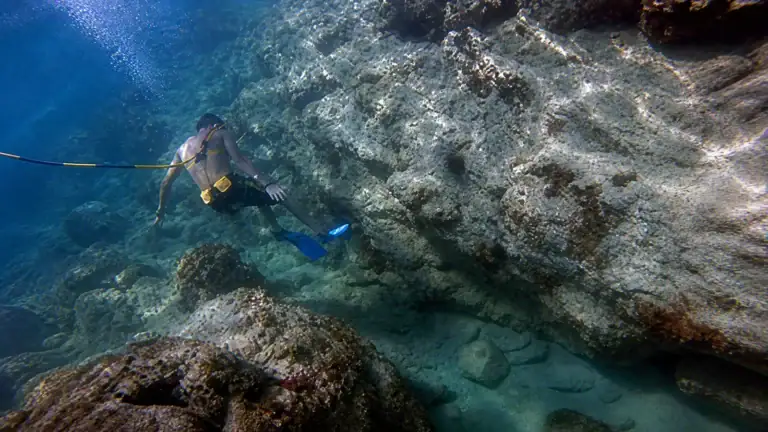
Sunlight does not behave underwater the way it does on land. It breaks into moving patterns, softens colors and turns small air bubbles into bright silver shapes. A passing cloud, a change in depth or a little movement at the surface can alter the whole scene.
Sint Maarten water is not a glass aquarium, and we do not pretend that it is. Visibility and color vary with weather, swell and local conditions. Some days look brighter and bluer; others have a greener cast or more movement in the water. The guide works with the conditions of the day and keeps the experience focused on what is actually there.
That honesty matters. A good underwater memory does not require perfect visibility. It can begin with seeing the sun above you, watching bubbles rise or realizing that you are comfortably looking around instead of thinking about every breath.
Movement becomes slower and more deliberate
On land, most of us move without thinking. Underwater, even a simple turn feels different. Fins replace ordinary steps, the body becomes lighter, and rushing usually accomplishes less than a calm kick.
During the briefing and guided surface practice, guests learn how to use the equipment and respond to the guide. Once those basics start to feel familiar, attention can move outward. You may notice the way another participant glides beside you, how the airline curves through the water or how the guide uses clear hand signals instead of words.
The experience is guided throughout. Nobody needs to arrive knowing how to dive, and eligible beginners do not need scuba certification. The current requirements and practical details are explained on our important information page.

Marine life appears on its own schedule
Reef fish may pass nearby. A small group may hold its position in the current, scatter, then return. You might spot a shape moving close to the bottom or a flash of color near the reef. Those moments are wonderful precisely because they are natural.
They are never guaranteed.
No responsible operator can promise a turtle, a particular fish, a certain route or any other wildlife encounter. Animals move freely, conditions change, and each departure develops differently. We also do not promise access to locations that are not part of the normal SNUBA experience.
Guests often enjoy the trip more when they leave the wildlife checklist on shore. Look carefully, stay close to the guide and let the surroundings reveal themselves. Sometimes the smallest detail—a striped fish holding its place, sunlight moving across the sand or a trail of bubbles—is the moment that stays with you.
Breathing can become the center of the experience
The regulator feels unfamiliar at first because breathing is through the mouth and the sound is close. That does not mean guests have to hurry past the sensation. The introduction is designed to give participants time to listen, breathe and follow the guide.
For many first-timers, there is a clear turning point: the equipment stops feeling like the whole story. The breathing rhythm settles, the shoulders relax, and the view becomes more interesting than the regulator. That transition may happen quickly or take a little longer. There is no prize for forcing it.
If something feels wrong, the useful response is to communicate. The guide can check equipment, repeat an instruction or help a participant return attention to the next simple step. Our SNUBA equipment guide explains how the surface-supplied system works before you arrive.
Small details make a personal story
People often expect the biggest moment to be a dramatic sighting. Sometimes it is. Just as often, the story they tell later is smaller and more personal: the first full breath with their face in the water, holding a hand signal correctly, seeing a family member become comfortable, or looking up and realizing how far away the surface appears even in shallow water.
Those details cannot be scheduled, which is why two guests on the same departure can remember completely different things. One remembers the fish. Another remembers the blue light. Someone else remembers the quiet satisfaction of doing something they were nervous about that morning.
That is the value of approaching SNUBA with curiosity instead of a script. The equipment and guide create a structured experience, but the memory belongs to the person having it.
Come ready to notice, not to collect
You do not need an underwater wildlife list to have a worthwhile SNUBA trip. Come ready to listen during the briefing, follow the guide, communicate clearly and give yourself time to settle into the water.
The rest depends on the day: the light, the conditions, the group and whatever happens to pass through the scene. We will never promise an animal or manufacture a certainty nature cannot provide. We can offer a real, guided opportunity to experience the underwater side of Sint Maarten.
Check current SNUBA departures
The official booking page shows the departures and options currently available. Visiting it does not create a reservation.
Check current SNUBA Sint Maarten departures and book directly with SNUBA SXM.
If you have an individual participation question, contact SNUBA SXM before booking so it can be considered against the current requirements.