Understand what you are booking
SNUBA vs. Hookah, Tankless Diving and Scuba
A hose leading to the surface does not automatically make an underwater activity SNUBA. The air source, depth limit, equipment and professional guidance all matter.
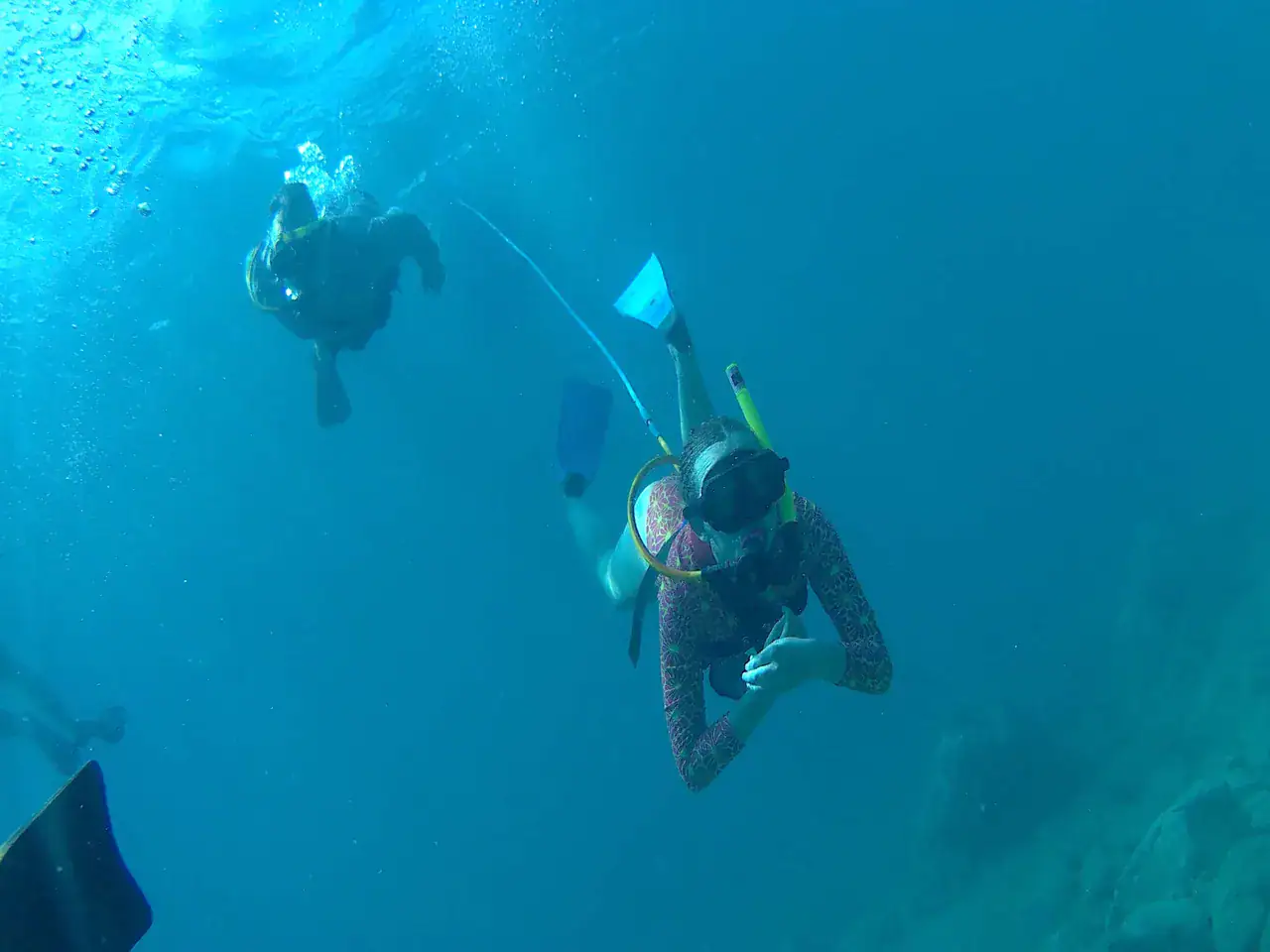
A photograph may show someone swimming underwater with a regulator in their mouth and a hose leading toward the surface. It is easy to assume that the activity is basically SNUBA. It may not be.
The useful question is not simply whether there is a hose. It is what supplies the breathing air at the other end of that hose, how the system limits the experience and who is guiding the participant underwater.
The biggest difference is at the surface
The components visible underwater can look deceptively similar. Both systems may use a mask, regulator, harness and air hose. The key distinction is above the diver.
Genuine SNUBA
The breathing air has already been compressed and stored before the departure. The cylinder travels on a purpose-designed floating raft, so the participant does not carry it on their back.
Typical hookah or tankless diving
The compressor draws air from the surrounding atmosphere and supplies it while the diver is underwater. Depending on the product, it may run on a battery, electricity or an engine.
Both arrangements can be engineered and operated responsibly. They are not interchangeable names for the same equipment.
Why a running compressor changes the system
Divers Alert Network’s explanation of hookah diving identifies carbon-monoxide contamination from boat exhaust as a serious hookah hazard. If a compressor intake draws contaminated air, the system can deliver that air to the diver. That is why compressor systems require appropriate intake placement, filtration, maintenance and operating procedures.
SNUBA removes that particular live-intake pathway from the activity: it does not continuously draw local surface air while guests are underwater. Once a properly filled cylinder is closed and brought to the site, a change in wind direction or nearby exhaust cannot suddenly be pulled into a running intake and passed down to the participant.
A SNUBA cylinder still has to be filled correctly. Poor compressor maintenance or contamination during the filling process can affect stored cylinder air, just as it can affect scuba cylinders. SNUBA does not make breathing-gas quality irrelevant; it separates the filling process from the active guest experience and stores the resulting air supply beforehand.
Stored air versus air produced during the dive
A filled diving cylinder is a stored-air system. The supply exists before the participant enters the water, and its remaining pressure can be monitored.
A compressor-based system is an active machine. Continued delivery can depend on a motor, compressor, power source, intake, filters, reservoir, controls and connections continuing to work together. That does not make cylinder-and-regulator equipment failure-proof; valves, regulators and hoses still require correct maintenance and operation. It simply means genuine SNUBA does not need a compressor to keep producing breathing air while the guest is underwater.
The 20-foot limit is part of the design
Genuine SNUBA is deliberately shallow. Its approximately 20-foot (6-metre) air hose physically defines the operating envelope. A participant cannot simply continue descending beyond its reach.
The original SNUBA diving-apparatus patent describes a surface raft carrying a compressed-air tank, a harness and nominal operating depths up to 20 feet. SNUBA International’s explanation likewise describes guests choosing a comfortable depth from the surface down to 20 feet while accompanied by a SNUBA Guide.
The original patent has expired, but SNUBA remains a protected brand. Genuine SNUBA is more than any improvised or consumer compressor rig described with a similar-sounding name. For a closer look at the actual guest equipment, see our guide to the SNUBA raft, hose and harness.
How SNUBA compares with other underwater experiences
Hookah or tankless diving
Typical systems draw ambient surface air into a running compressor. Product depth limits, training, backup supplies, filtration and intended users vary by system.
Discover Scuba Diving
The participant carries scuba equipment and learns introductory skills. PADI describes its Discover Scuba Diving program as training and skill practice with an optional open-water dive to a maximum of 12 metres or 40 feet.
Snorkeling
No compressed breathing gas is used. The snorkel opening stays above the water while the guest breathes; any descent is made while holding a breath.
Freediving
This is a breath-hold discipline. The diver descends on one breath and returns to the surface before breathing again. It is its own sport with distinct training and risks.
Helmet walking
A helmet receives a continuous flow of surface-supplied air while guests usually walk along a defined underwater route. SNUBA guests swim with a mask, fins, harness and regulator.
Genuine SNUBA
The cylinder remains on the purpose-built surface raft. Guests swim within a shallow physical hose limit while a trained SNUBA Guide accompanies the underwater experience.
Official system explainers and media
These first-party resources show how their respective equipment is presented by its manufacturer or training organization. They are included so readers can inspect the systems directly rather than rely on look-alike photographs.
SNUBA International
Official overview of the surface raft, shallow depth range and guided participant experience.
AirBuddy
Official tutorials for a battery-powered floating compressor system and its setup.
BLU3 Nomad
Official product page explaining its floating battery-powered compressor and Smart Reg system.
SeaTREK helmet diving
Official system page showing a continuous-flow helmet experience and its guided walking format.
PADI Discover Scuba
Official answers about introductory scuba training, equipment and depth.
DAN hookah guidance
Independent diving-medicine guidance about compressor placement, breathing-air quality and operation.
Why genuine SNUBA works well for a first underwater experience
- No scuba cylinder on the participant’s back.
- A maximum depth of approximately 20 feet.
- A physical hose limit rather than depth control by instruction alone.
- Continuous breathing underwater, unlike snorkeling or freediving.
- Natural swimming, unlike a traditional helmet walk.
- A visible surface raft carrying the stored air supply.
- A trained SNUBA Guide accompanying the experience.
- No scuba certification required for eligible participants.
That combination is why SNUBA is often described as a bridge between snorkeling and scuba. It is not scuba with a missing tank, and it is not snorkeling with a longer tube. It is a distinct guided recreational system. If you need the basics first, read what SNUBA is and how it works.
SNUBA is still diving
Simple equipment should never be confused with an absence of responsibility. A SNUBA participant breathes compressed air underwater. Guests still need to equalize their ears, breathe continuously rather than hold their breath during ascent, follow the guide and disclose relevant medical information. Equipment condition, water conditions, participant behaviour and professional judgement all matter.
In all the public records that are available and have been reviewed, we found no determination that the SNUBA system ever caused a fatality.
That statement is not a promise that risk has disappeared. It is one reason genuine SNUBA combines purpose-designed equipment with a shallow operating limit, participant instruction, eligibility requirements and professional supervision.
Questions to ask before booking a SNUBA-like activity
- Where does the breathing air come from?
- Is it stored in a diving cylinder or produced by a compressor during the activity?
- What is the maximum depth, and does the equipment physically limit it?
- Who will be in the water with the participants?
- What training does that person have?
- Is the operator a licensed SNUBA Recreational Center?
- Is the equipment genuine SNUBA equipment?
The purpose is not to frighten anyone away from another professionally run activity. It is to make sure you understand what you are actually booking.
A hose leading to the surface does not make something SNUBA
Genuine SNUBA combines stored compressed breathing air, a purpose-designed surface raft, a shallow physical depth limit, a harness and air-line system, participant instruction and a trained guide in the water.
Other activities can also give people a memorable first look underwater. They deserve to be described accurately on their own terms. Not everything that resembles SNUBA is SNUBA, and when the equipment supplies the air you breathe underwater, understanding the difference matters.
Experience genuine SNUBA in Sint Maarten
SNUBA SXM offers professionally guided experiences for eligible participants. See live departures and book directly on our official website.